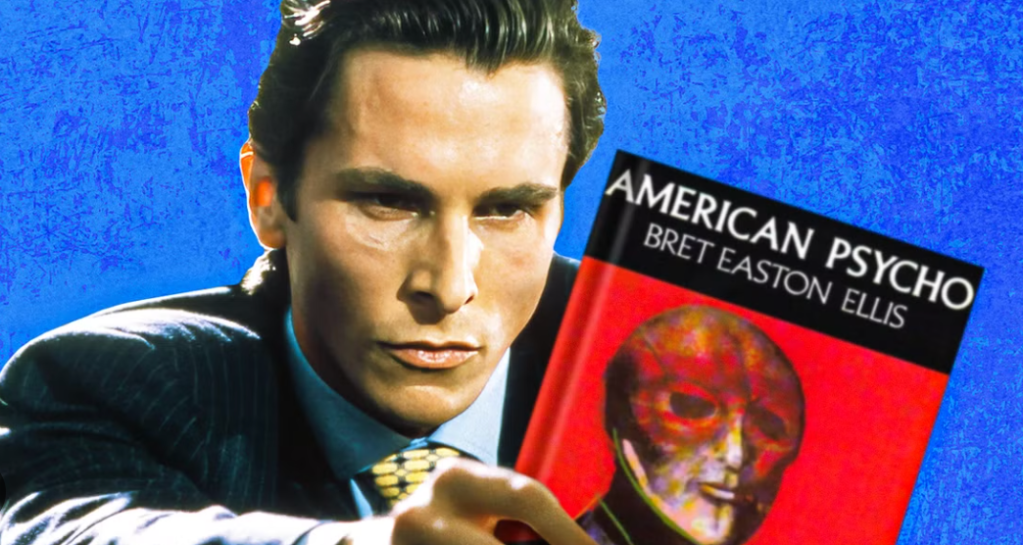
Plot Overview: American Psycho follows 26-year-old Patrick Bateman, a wealthy man with a white collar job in 1980s New York, with the inconvenient hobby of brutal murder.
Writing: I struggled getting through this novel and initially gave up on reading it after 100 pages, deciding not to continue to suffer through the bleak carousel of overpriced dinners, shallow conversations, and Patrick Bateman’s unbearable personality. At this point in the novel, the only thing going on is that protagonist is an ass. Nonetheless, a few weeks later I returned and finished the novel, which finally kicks off after alluring to Bateman’s murders as he gives his dry cleaner blood stained craneberry stained sheets, and it is here readers realise this isn’t his first murder, just the first time readers are filled in. From there, the novel only gets more gruesome, with the New York Times dubbing the ““the most loathsome offering of the season,” upon its release. The scene I found most striking in the novel with outstanding writing was during his killing spree throughout New York at the end of the novel, made especially immersive with the change from first to third person, leaving the reader more disconnected from Bateman than ever. What made it even more disturbing was when Bateman’s reality unfolds, arriving at the address of the wrong Paul Owen and when he confesses to his crimes he is met with laughter – the reader can only wonder how reliable Bateman is of a narrator.
Characters: Although Patrick Bateman has become somewhat of an icon in pop culture over the years, particularly following the rise of Chinese app TikTok, with countless edits, halloween costumes and trends in his honour, the fact remains that Bateman is absolutely insufferable. The only character development evident is his progressive maddening as his sanity slips away and his crimes grow more brutal. In every way Bateman is unlikeable and unrelatable (hopefully), however his actual character is much less important than his function, which is to mirror the era of greed and moral bankruptcy in the 1980s, which is arguable more relevant today than ever considering the capitalist extremities we are living in.
Verdict: To read
 To read or not to read
Leave a comment